policy
One in six parents have kept a child out of a bedroom over damp or mould, FMB poll finds
Savanta polling for the Federation of Master Builders found 41% of UK adults have had to act on damp or mould at home, prompting a renewed call for the licensing of all builders.
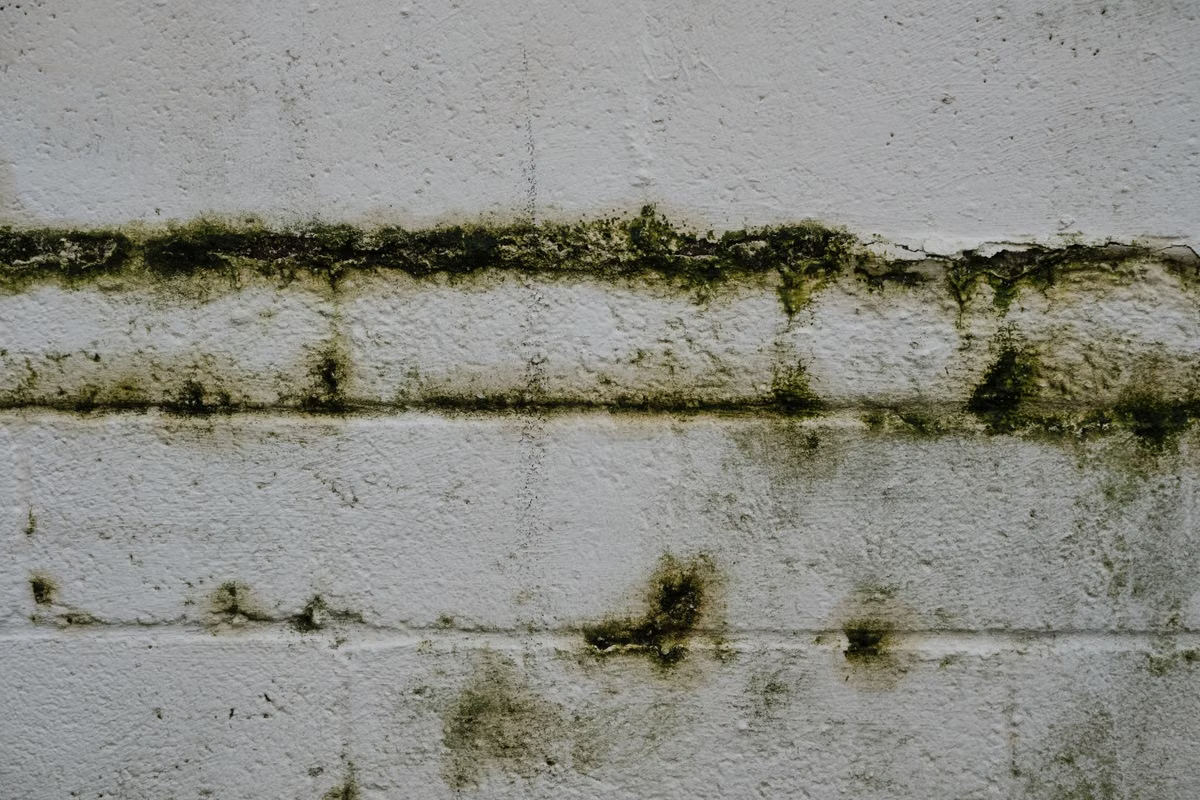
One in six parents of children under 18 have had to keep a child out of a bedroom because of damp or mould, according to research published by the Federation of Master Builders (FMB) on 20 November.
The trade body said Savanta polling of more than 2,000 UK adults found 41% had been forced to take action because of damp or mould in their home. More than a quarter (27%) had thrown away clothes, furniture or toys, 16% had moved a bed away from a damp wall and 10% had stopped using a room altogether.
Parents reported worse figures. The FMB said 56% of parents with children under 18 had taken action, 38% had thrown away belongings and 13% had stopped using a room.
Brian Berry, Chief Executive of the Federation of Master Builders, said: "No family should have to choose which rooms in their home are safe to use."
Who is affected
Age made a sharp difference in the responses. The FMB said 60% of 26 to 34-year-olds had been affected by damp or mould, against 14% of over-65s.
Almost half of UK adults (48%) had spent money trying to fix damp or mould in the last five years, the FMB said, but 26% had spent under £100. The release gives no fieldwork dates for the poll.
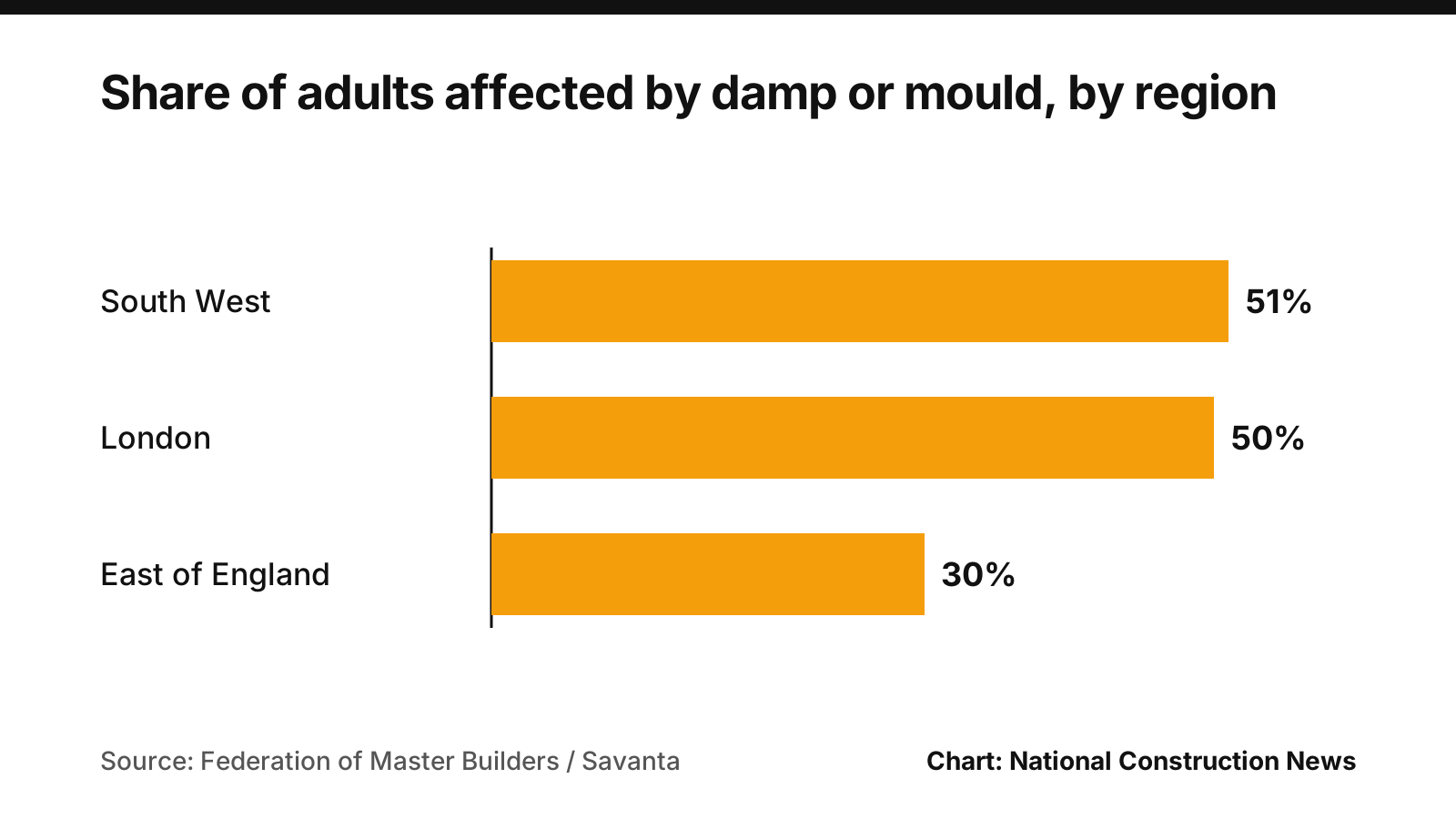
By region, the FMB said the South West and London were the worst-hit parts of the UK and the East of England the least affected.
| Region | Affected |
|---|---|
| South West | 51% |
| London | 50% |
| East of England | 30% |
The licensing call
Berry used the findings to repeat the FMB's demand for mandatory licensing of builders. He said: "Our advice is to find the cause and fix it properly, using a reputable builder."
The FMB's Licence to Build campaign says 86% of builders want the government to introduce a scheme that protects both the trade and consumers. The FMB describes itself as the UK's largest trade association for small and medium-sized building companies and says every company joining it undergoes a vetting and inspection process before becoming a Master Builder.
Alongside the poll, the FMB published tips for householders. These include checking gutters, downpipes and pointing before winter and using breathable materials such as lime mortar and render rather than cement on older homes.
The FMB's October 2026 damp guidance says penetrating damp is likely caused by blocked gutters, failed pointing or cracked render, and advises owners of older properties to use breathable plasters and paints such as lime-based systems.
Official data
The FMB figures are self-reported by householders. The Ministry of Housing, Communities and Local Government's English Housing Survey found that in 2024, 5%, or 1.4 million, dwellings in England had a problem with damp.
In Wales, where the FMB's release headline focuses, the Welsh Government is changing the rules for social landlords. In a written statement dated 19 December 2025, Jayne Bryant, Cabinet Secretary for Housing and Local Government, said she would update the Welsh Housing Quality Standard (WHQS) to set out clear timescales for investigating and remedying hazards including damp and mould.
The Welsh Government said social landlords must now publish response times and report on their performance as part of the WHQS compliance return. Ministers propose to specify a rule on landlords' response to damp, mould and other hazards which, once set, will need to be met to comply with WHQS 2023.
On the record: Federation of Master Builders, Ministry of Housing, Communities and Local Government
Sources
- Federation of Master Builders (opens in a new tab) (accessed 2026-11-20)
- Federation of Master Builders (opens in a new tab) (accessed 2026-11-20)
- Federation of Master Builders (opens in a new tab) (accessed 2026-11-20)
- Federation of Master Builders (opens in a new tab) (accessed 2026-11-20)
- Ministry of Housing, Communities and Local Government (GOV.UK) (opens in a new tab) (accessed 2026-11-20)
- Welsh Government (opens in a new tab) (accessed 2026-11-20)
- Welsh Government (opens in a new tab) (accessed 2026-11-20)
This story was researched from the primary sources above and checked against them before publication. Spotted an error? Tell us and we will correct it promptly.