policy
Renovating to new build standard could cost over £170,000, Home Builders Federation says
The Home Builders Federation says buyers underestimate the cost of upgrading older homes, and wants the long-term savings of new build homes recognised when lenders assess mortgage affordability.
Renovating an older home to new build standard could cost more than £170,000, while most adults surveyed would expect to budget no more than £50,000, according to research published by the Home Builders Federation (HBF).
HBF, which describes itself as the principal voice for home builders in England and Wales, said the estimate relates to bringing a three-bed semi-detached property up to the energy efficiency, comfort and technology of a new build home.
Its press release gives the cost as both "over" and "around" £170,000. The federation's report page gives a range of £57,350 to £173,900 for bringing an older home up to modern standards, which puts the headline figure at the upper end.
Steve Turner, Executive Director at the Home Builders Federation, said: "Many buyers believe that renovation projects offer greater long-term value, but our research shows that the reality can be very different."
The survey
HBF said 56% of those surveyed would not expect to budget more than £50,000 to renovate a property, and 29% expected to spend £25,000 or less. Only 1% expected the cost to exceed £150,000.
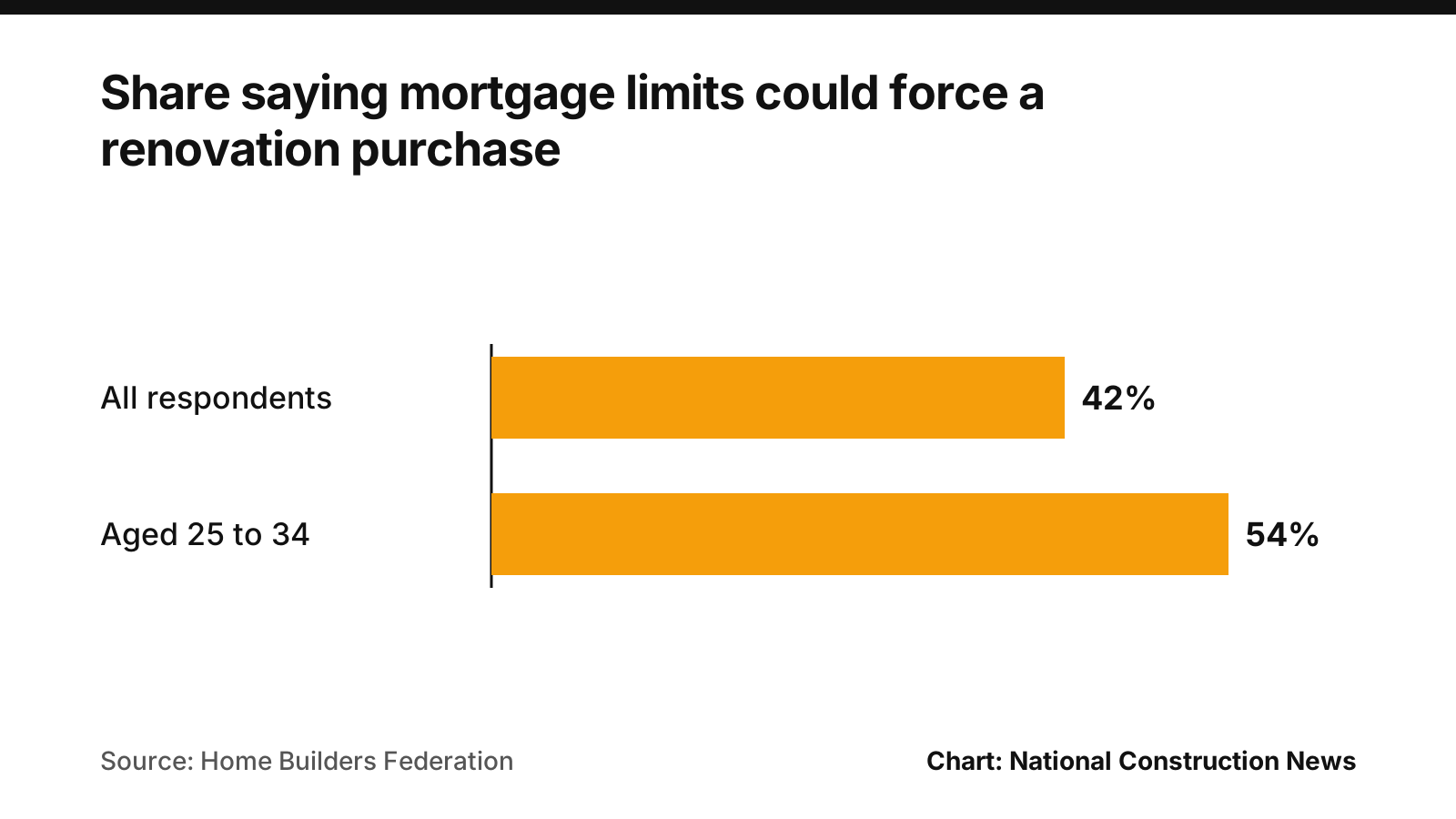
The federation also said 42% of respondents thought mortgage affordability limits could force them to buy a property needing significant renovation work, with the figure higher among younger adults.
| Group | Share saying mortgage limits could force them to buy a home needing significant renovation |
|---|---|
| All respondents | 42% |
| Aged 25 to 34 | 54% |
Turner said renovation could suit some buyers. "Renovation projects can be rewarding for some homeowners, but it is important buyers are fully informed," he said.
Energy figures
The energy comparisons in the report draw on research HBF carried out with Octopus Energy, and the federation's own publications present them in slightly different ways.
The press release says the average new build household saves about £420 a year on energy bills against an older property with an Energy Performance Certificate (EPC) rating of D, and about £650 a year against homes rated F or G. It also says the average new home uses about 30% less energy.
HBF's February 2026 release on the Octopus Energy research put the £420 saving against older properties on average, describing it as 21% less, and said the average new build was 39% cheaper to run than an F or G rated older home. That research put average annual energy spend for new build homeowners at about £1,574.
On EPC ratings, the press release says virtually all new builds achieve an A or B against less than 5% of older homes. The report page puts the figures at 87% of new build homes and 5% of older homes.
The February research estimated that upgrading an existing home to new build energy efficiency standards alone would cost between £23,100 and £83,000. The new, higher range also covers comfort and technology, so the two estimates are not like for like.
What HBF wants
The findings are published in HBF's Nothing Compares to New report, part of its Power to Personalise campaign. The federation said the report looks at consumer perceptions of the "new build premium" and the potential cost of updating resale homes.
According to HBF, the report calls for more transparency on renovation and ownership costs, and for the long-term savings of new build homes to be recognised in mortgage affordability considerations.
What happens next
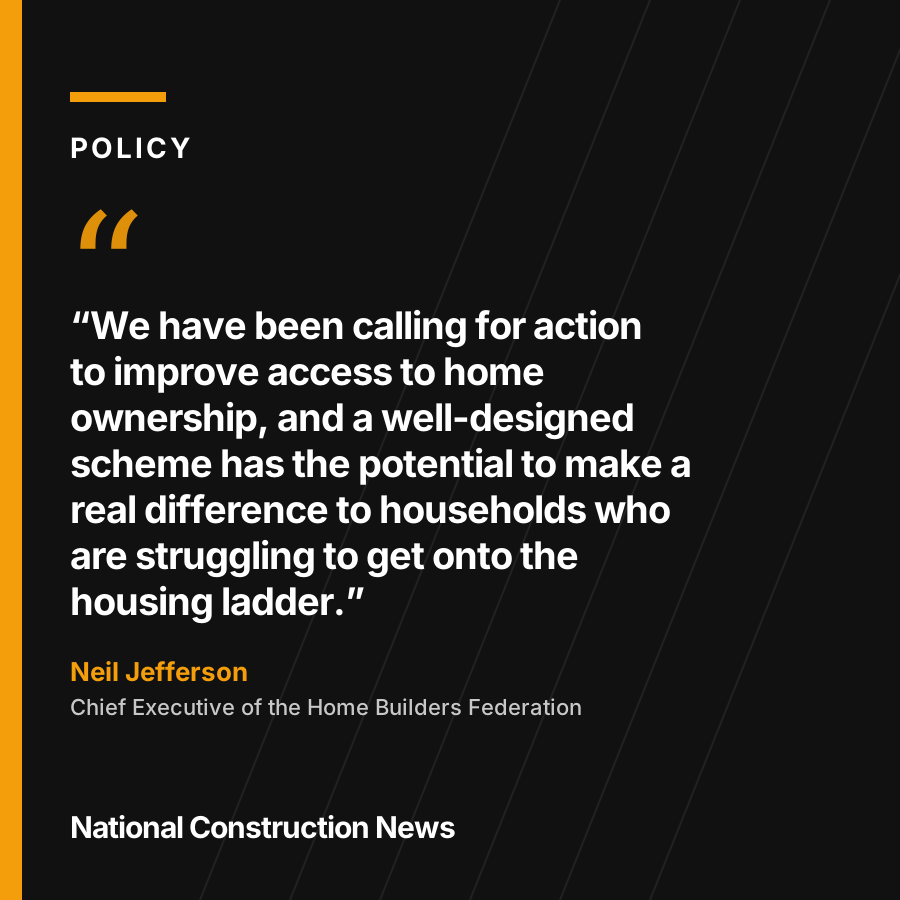
HBF said the survey finding among 25 to 34-year-olds underlined the need for the first-time buyer scheme announced by the government.
The Ministry of Housing, Communities and Local Government said on 26 September 2026 that the scheme is expected to support 2.5% deposits, backed by 20% government-backed equity loans, for first-time buyers purchasing a new build property from a developer signed up to it. It will have a household income cap and local property price caps.
Further details, including costs and timing, are due to be announced by the Chancellor at the Budget in October 2026.
Sources
- Home Builders Federation (opens in a new tab) (accessed 2026-10-03)
- Home Builders Federation (opens in a new tab) (accessed 2026-10-03)
- Home Builders Federation (opens in a new tab) (accessed 2026-10-03)
- Ministry of Housing, Communities and Local Government (opens in a new tab) (accessed 2026-10-03)
- Home Builders Federation (opens in a new tab) (accessed 2026-10-03)
This story was researched from the primary sources above and checked against them before publication. Spotted an error? Tell us and we will correct it promptly.