results
Southern builders busy now but enquiries fall to -16%, FMB survey finds
Small builders in the South of England posted the second strongest workload balance in England in the first half of 2026, but new enquiries fell faster than the UK average, the FMB said.
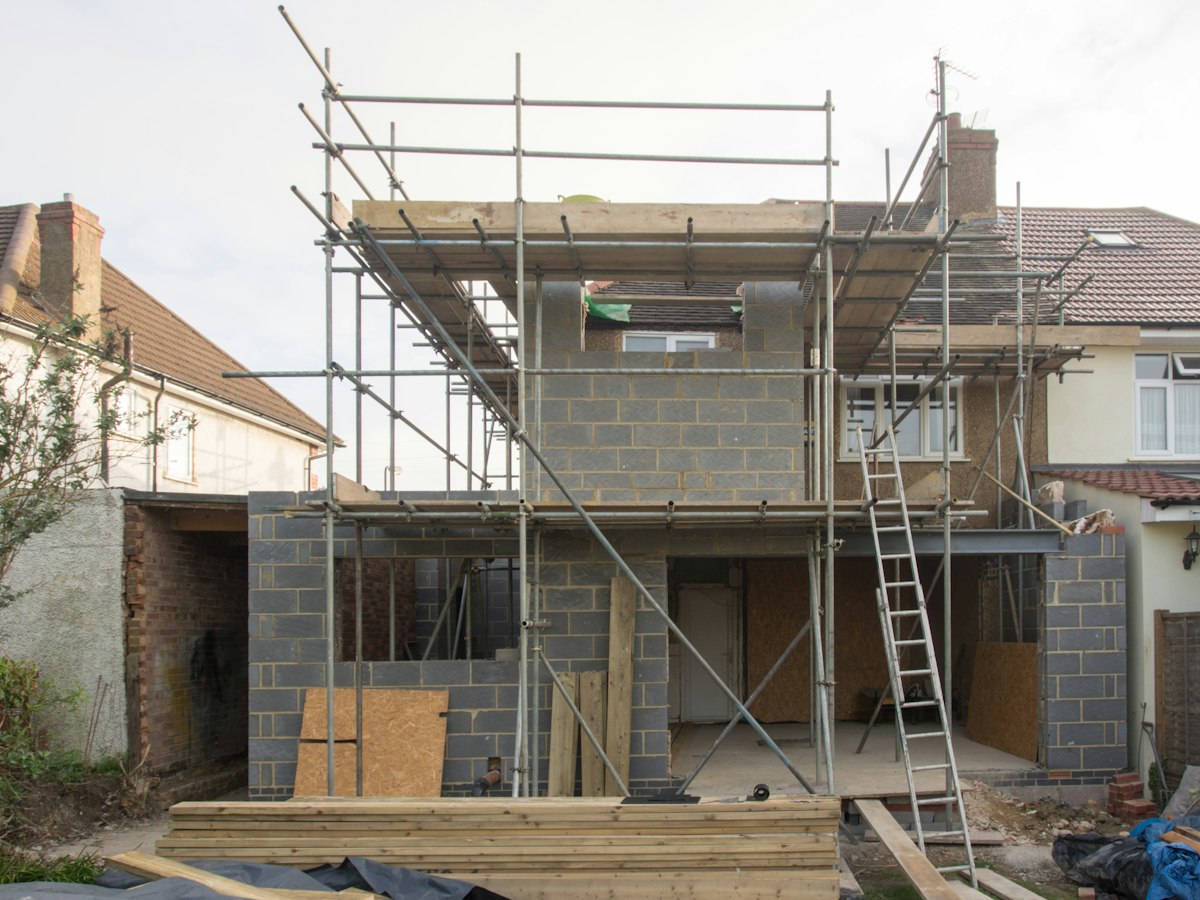
Small building firms in the South of England recorded a net workload balance of +12% in the first half of 2026 but saw enquiries for new work fall to -16%, the Federation of Master Builders (FMB) said on 17 November.
The figures come from the latest State of Trade Survey, run by the FMB with the Chartered Institute of Building (CIOB). The FMB said the South's workload balance was the second highest of the English regions, but that the fall in enquiries was worse than the UK figure of -10% and a warning sign for jobs in 2027.
Iain Kirtley, Director of FMB South, said: "Enquiries are the best guide to the work coming down the line, and fewer homeowners are asking for quotes."
He said homeowners needed the confidence to press ahead with their projects, and that builders needed help to train the next generation.
The UK picture
The FMB said the survey received 416 responses and covers January to June 2026. Net balances show the difference between the percentage of businesses reporting increases and those reporting decreases.
Across the UK, the CIOB reported headline net balances of -4% for workloads, -10% for enquiries and -4% for employment. The FMB said enquiries showed the sharpest downturn, with all three headline measures turning negative in the period.
That marks a reversal from the previous edition, covering July to December 2025, when the FMB put UK net balances at +22% for workloads, +18% for enquiries and +17% for employment. England recorded workloads of +22% and enquiries of +19% in that survey, which drew 493 responses.
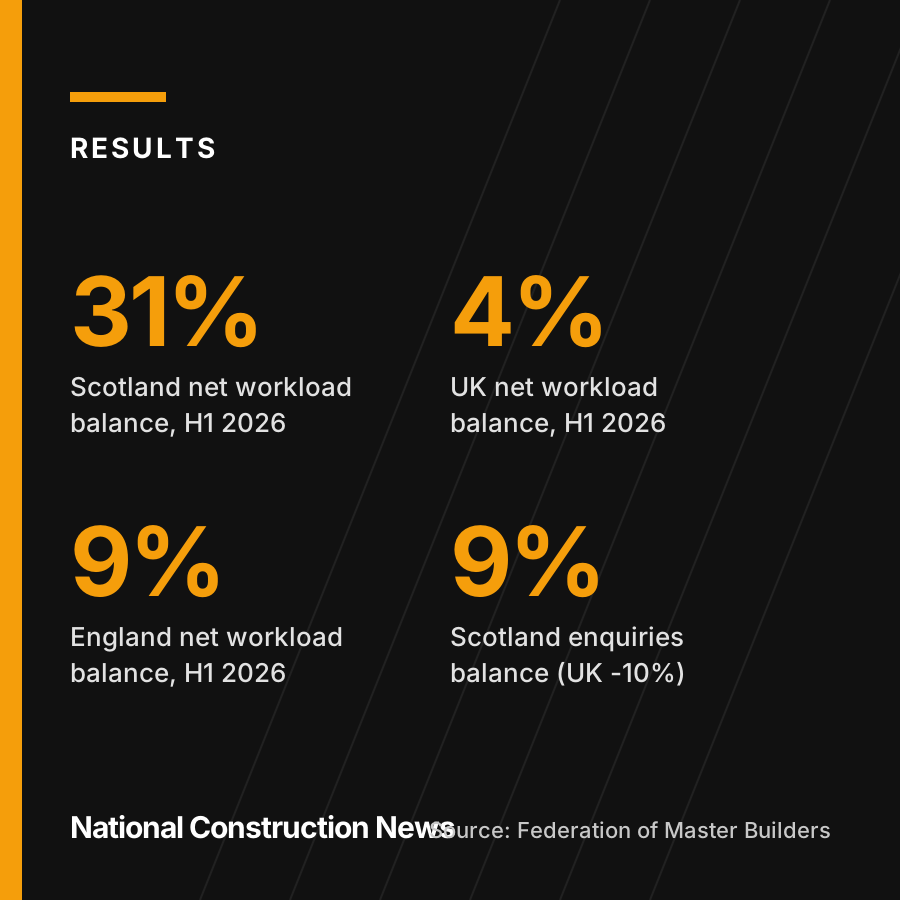
The South's workload figure stands against -9% for England as a whole in the first half of 2026. The CIOB said Scotland recorded the strongest net workload balance of the UK nations at +31%, followed by Wales at +14%. The FMB said Scotland was the only UK nation where enquiries rose, with a net balance of +9%, while Wales recorded -8%.
| Area | Net workload balance, H1 2026 |
|---|---|
| Scotland | +31% |
| Wales | +14% |
| South of England | +12% |
| UK | -4% |
| England | -9% |
Costs and skills
Across the UK, 75% of builders saw material costs rise, 68% were hit by a lack of skilled tradespeople and 47% were forced to delay jobs, the FMB said. It added that 21% of businesses reported cancelled jobs because of skills shortages.
The CIOB said businesses also reported cost increases in transport and fuel (66%), energy and utilities (62%), subcontractors (57%) and wages (45%). Of firms facing increased costs, 48% raised the prices they charged for work, according to the FMB. One in five businesses (20%) reported project delays linked to extreme weather, including heatwaves and rainfall, the CIOB said.
Victoria Collins from KingsRock Construction in Sussex said: "People are nervous about spending. Every time I order materials the price has crept up."
Dr Victoria Hills, Chief Executive of the CIOB, said the construction sector continued to be an industry where many SMEs have to fight to survive, and that this had to change.
AI use
More than half (57%) of firms have increased their use of AI, mainly for admin, quotes and tenders, the FMB said, while 22% say they are not using AI at all. Among businesses already using AI, the CIOB said 80% deploy it for administration and office tasks and 42% use it to prepare quotes, estimates and tenders.
Brian Berry, Chief Executive of the FMB, said the figures showed AI was becoming a more established part of how construction firms run their businesses, but that technology was not a silver bullet because more firms reported falls than increases in workloads, enquiries and employment.
Outlook
The FMB said 39% of businesses feel positive about the rest of 2026, compared with 23% feeling negative. In the previous survey, 48% had been positive about the first half of 2026.
The FMB describes itself as the UK's largest trade association for small and medium-sized (SME) building companies, with around 6,500 vetted SME building company members. The State of Trade Survey has tracked trends in the SME construction sector for more than 30 years.
On the record: Federation of Master Builders, Chartered Institute of Building
Sources
- Federation of Master Builders (opens in a new tab) (accessed 2026-11-18)
- Federation of Master Builders (opens in a new tab) (accessed 2026-11-18)
- Chartered Institute of Building (opens in a new tab) (accessed 2026-11-18)
- Federation of Master Builders (opens in a new tab) (accessed 2026-11-18)
- Federation of Master Builders (opens in a new tab) (accessed 2026-11-18)
- Federation of Master Builders (opens in a new tab) (accessed 2026-11-18)
- Federation of Master Builders (opens in a new tab) (accessed 2026-11-18)
This story was researched from the primary sources above and checked against them before publication. Spotted an error? Tell us and we will correct it promptly.